
Sustainable salmon buying guide
Salmon is one of the most popular seafood and sushi ingredients in the United States. In fact, on average, we each eat over three and a half pounds of salmon every year! Environmentally sustainable salmon can be tough to come by, but salmon lovers should not despair! Environmentally friendly options are out there, but it’s important to know what to buy and what to avoid.
Quick buying guide
Find out if the salmon is wild-caught or farmed. If in doubt, it’s probably farmed Atlantic salmon.
- Buy wild U.S. salmon—nearly 100 percent is Marine Stewardship Council (MSC) certified.
- Buy wild Chinook and coho salmon from Canada from businesses committed to sustainable seafood, or you confirm it’s from a yellow-rated source.*
- Buy farmed Chinook salmon from New Zealand.
- Buy farmed Atlantic salmon from the U.S. or the Faroe Islands.
- Buy Aquaculture Stewardship Council (ASC) or Marine Stewardship Council (MSC) certified salmon, except MSC certified salmon from Russia.
- Buy salmon farmed in indoor recirculating tanks (also called RAS, land-based, and tank-farmed).
- Avoid farmed Atlantic salmon from Canada, Chile, Norway, or Scotland, except when it’s ASC certified, from businesses committed to sustainable seafood, or you confirm it’s from a yellow-rated source.*
* Please scroll down for more information.
What to buy or avoid?
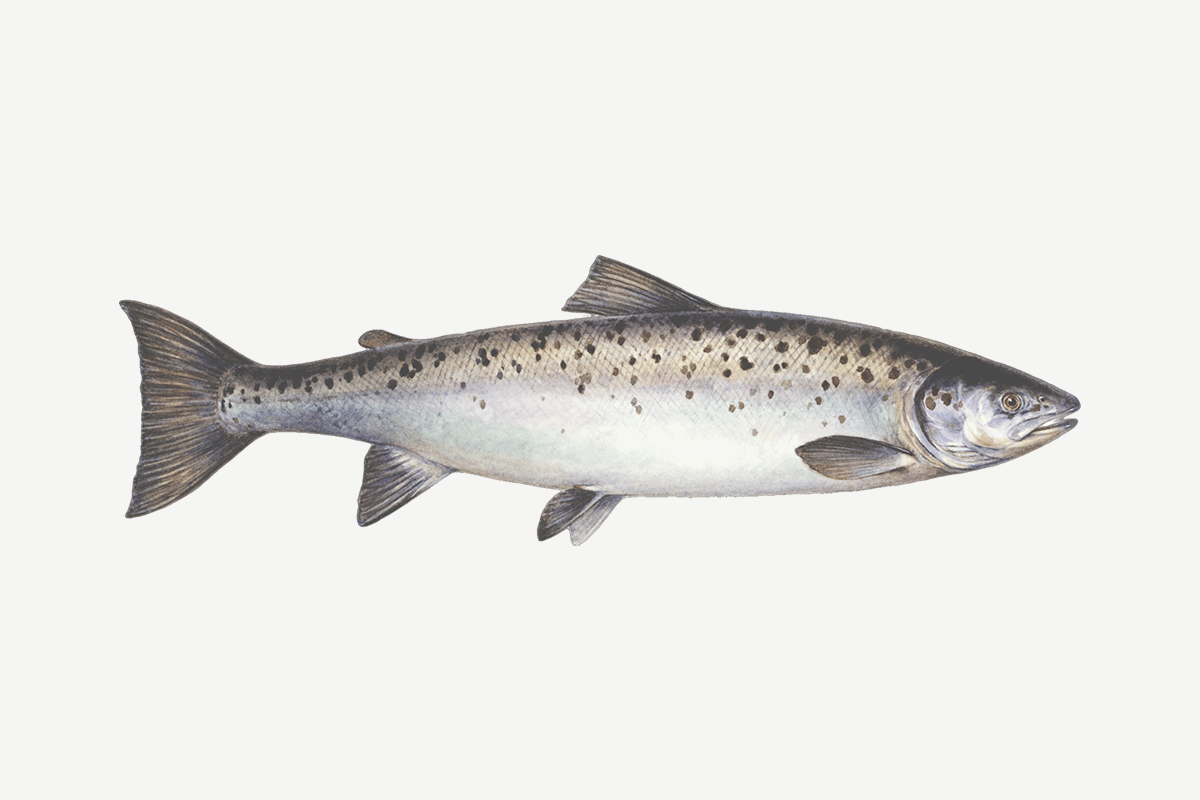
Atlantic salmon
All Atlantic salmon is farmed, and there’s no commercial fishing for this species in the U.S.
- Buy Atlantic salmon farmed in indoor recirculating tanks (also called RAS, land-based, and tank-farmed).
- Buy Atlantic salmon farmed in the U.S.
- Buy Atlantic salmon farmed in the Faroe Islands, Denmark.
- Buy Aquaculture Stewardship Council (ASC) certified salmon.
- Avoid Atlantic salmon farmed in Canada, Chile, Norway, or Scotland, except when purchasing from businesses committed to sustainable seafood, it’s ASC certified, or you confirm it’s from one of the below yellow-rated sources:
- Magallanes region (Region 12) in Chile
- Production Areas 1, 12, or 13 in Norway
- Nova Scotia, Canada
- Orkney Islands, Scotland
© Scandposters
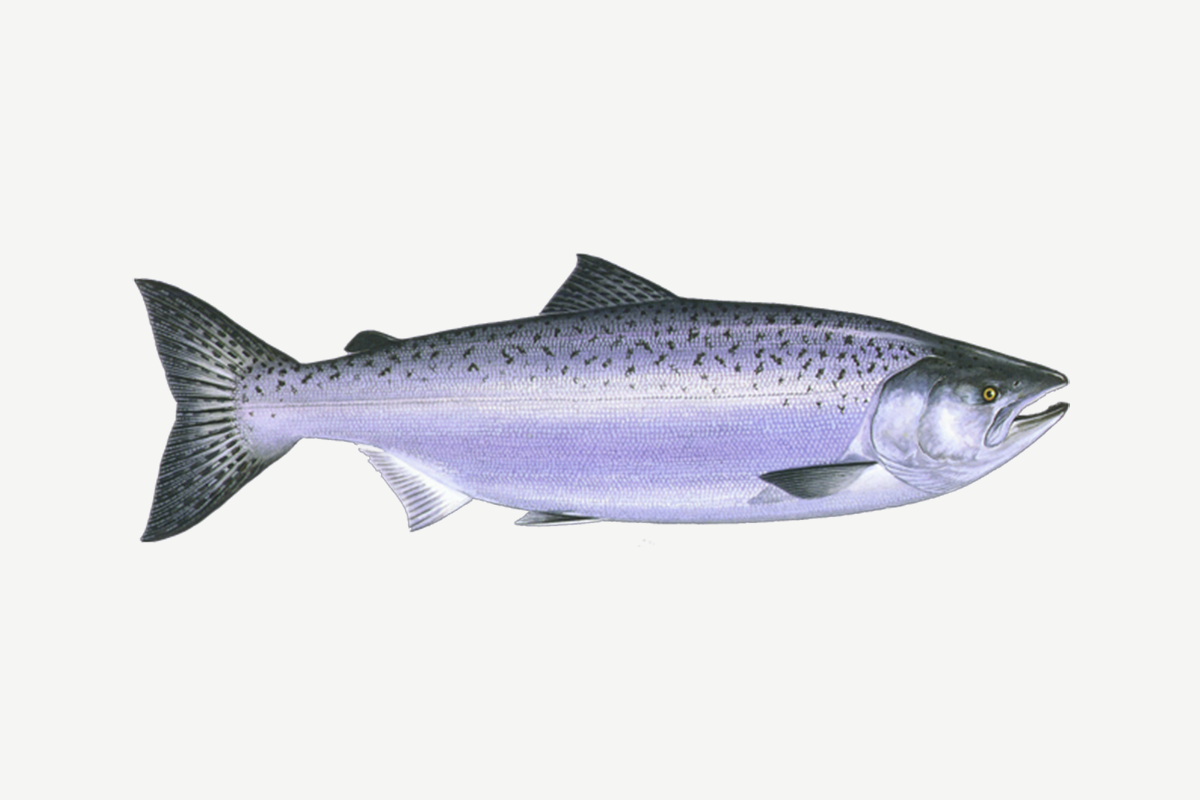
Chinook salmon
Chinook salmon is wild-caught and farmed. Some Chinook populations are healthy, and others are overexploited. Chinook salmon is also marketed as king salmon.
- Buy wild Chinook salmon from the U.S.—except when caught in Washington State’s Puget Sound.
- Buy wild Chinook salmon from Canada from businesses committed to sustainable seafood, or if you confirm it’s from one of these yellow-rated sources:
- British Columbia’s Central and North Coasts
- British Columbia’s Area D Gillnet Fishery
- Stikine and Taku Rivers
- West Coast of Vancouver Island
- Buy farmed Chinook salmon from New Zealand.
- Buy farmed Chinook salmon from British Columbia, Canada.
- Buy Chinook salmon farmed in indoor recirculating tanks (also called RAS, land-based, and tank-farmed).
- Avoid wild Chinook from British Columbia’s South Coast—except if you confirm it’s from the Area D Gillnet Fishery.
© Scandposters
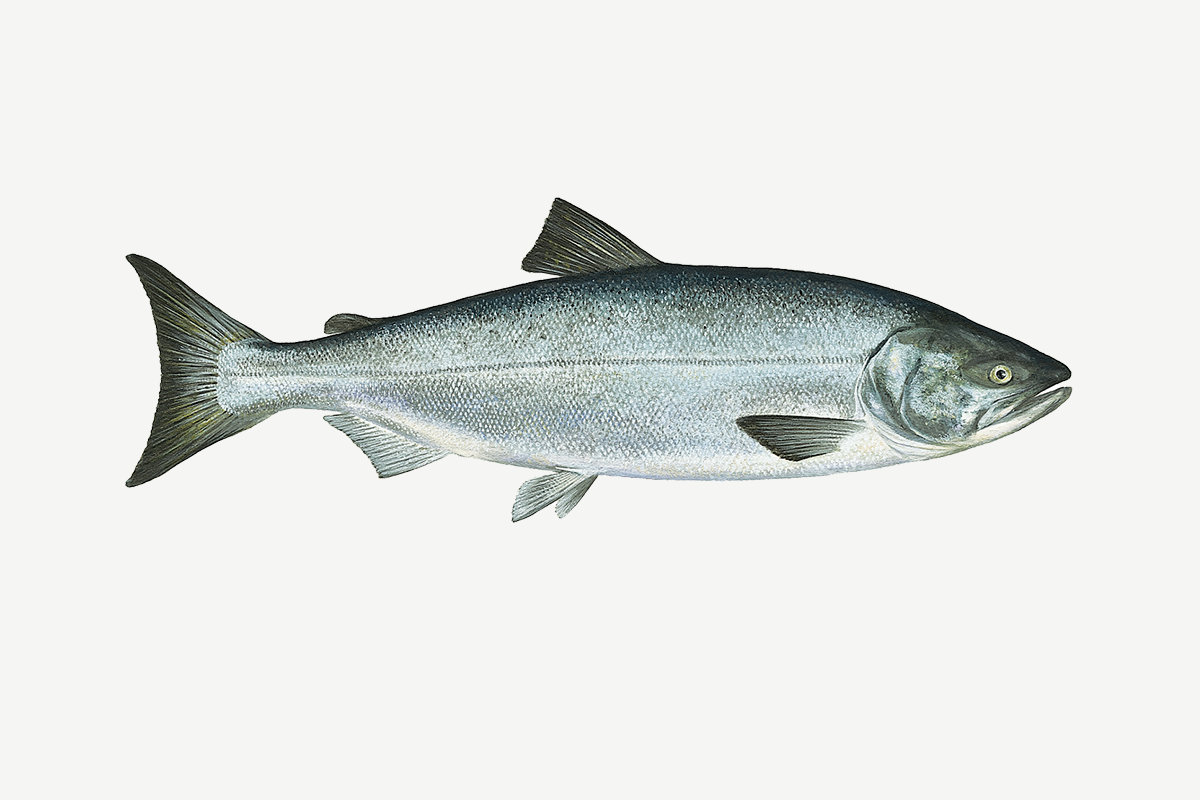
Chum salmon
All chum salmon is wild-caught, and it’s unknown if the main chum populations are healthy, though overfishing is unlikely. Chum salmon is also marketed as dog salmon, keta salmon, or silverbrite salmon.
- Buy chum salmon caught in the U.S.
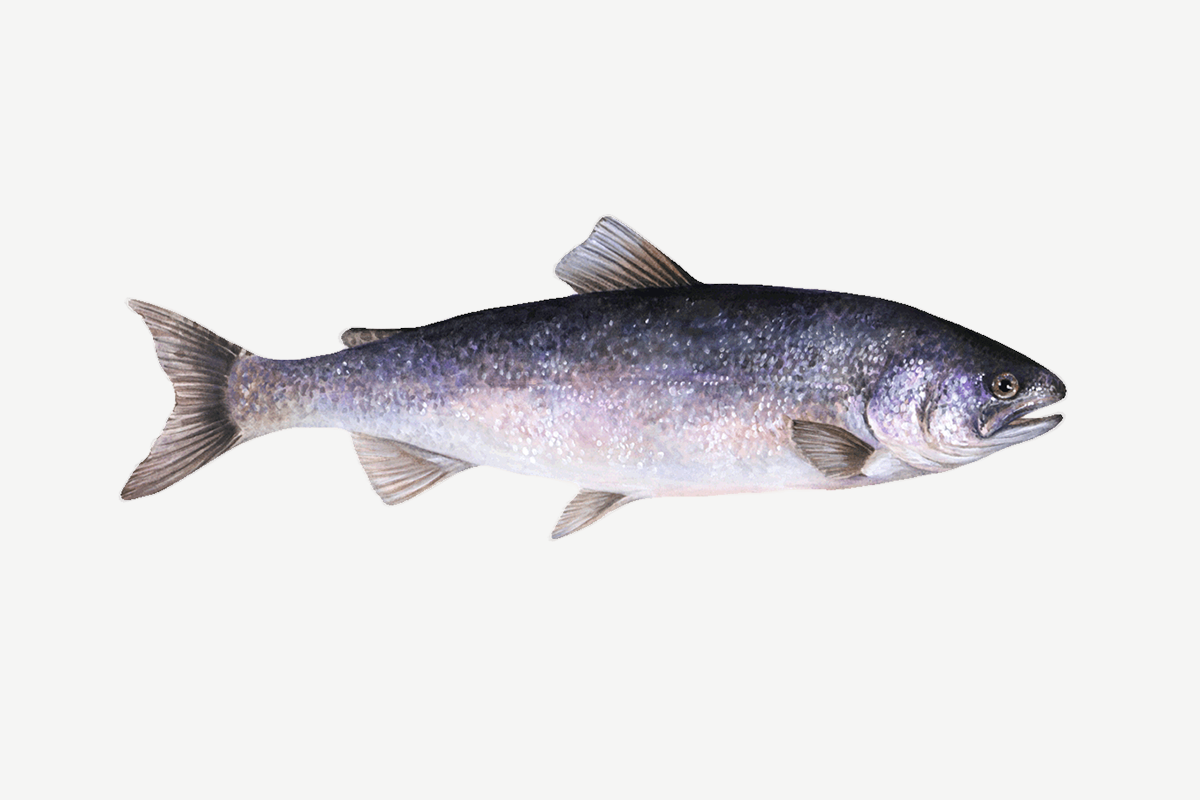
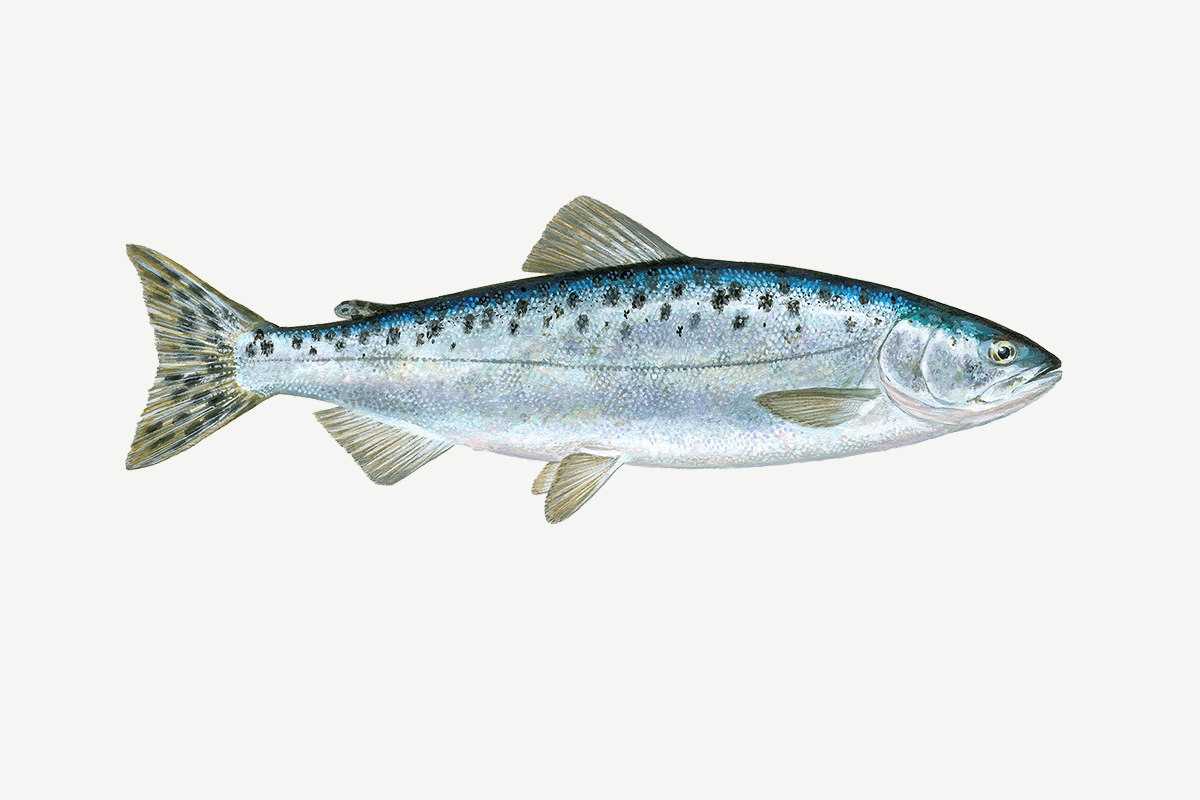
Coho salmon
Coho salmon is wild-caught and farmed. Some coho populations are healthy, and others are overexploited. Coho salmon is also marketed as silver salmon.
- Buy wild coho salmon from the U.S. The tiny exception is red-rated coho caught above Bonneville Dam in the Columbia River, which accounts for less than two percent of U.S. production.
- Buy wild coho salmon from Canada from businesses committed to sustainable seafood, or if you confirm it’s from one of these yellow-rated sources:
- British Columbia’s Central and North Coasts
- British Columbia’s Area D Gillnet Fishery
- Stikine and Taku Rivers
- West Coast of Vancouver Island
- Buy coho salmon farmed in indoor recirculating tanks (also called RAS, land-based, and tank-farmed).
- Avoid wild coho salmon from British Columbia’s South Coast—except if you confirm it’s from the Area D Gillnet Fishery.
- Avoid coho salmon farmed in Chile.
© Scandposters
Pink salmon
All pink salmon is wild-caught, and the populations are healthy. Pink salmon is also marketed as humpback salmon.
- Buy pink salmon from Washington. It's green-rated when caught with lift nets, and everything else is yellow-rated.
© Scandposters
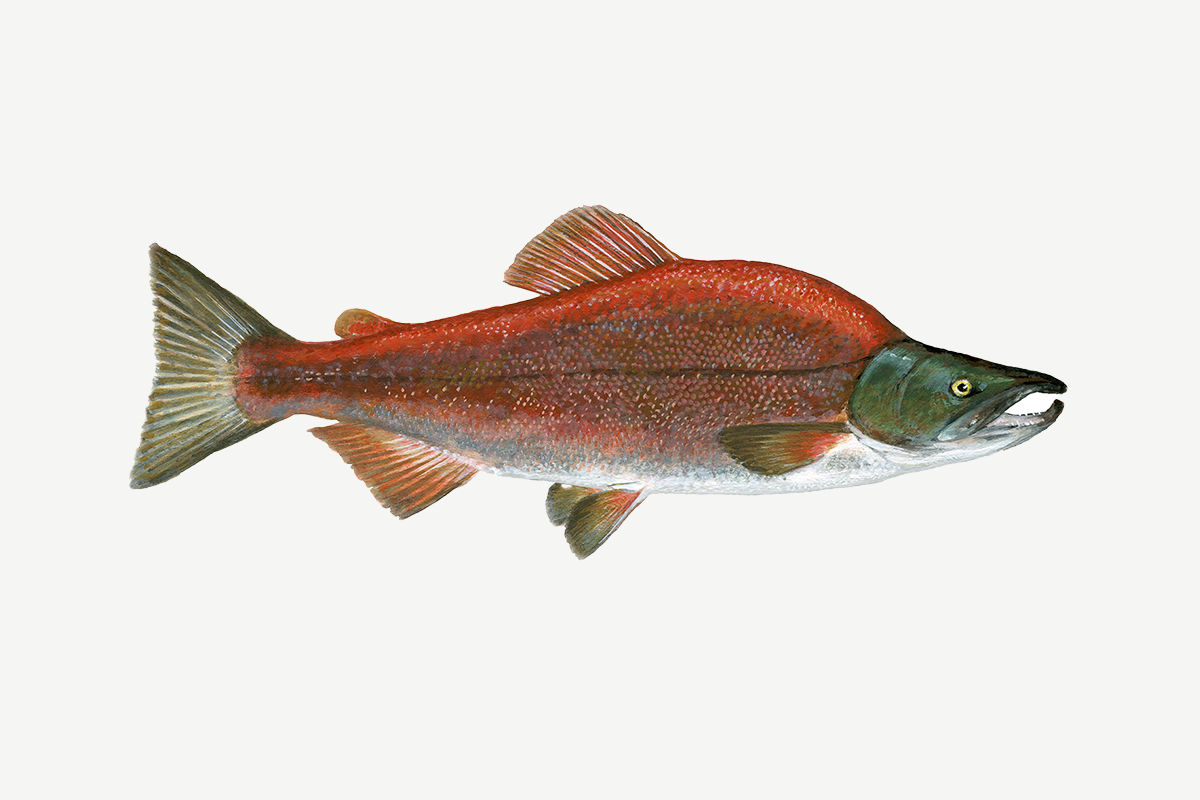
Sockeye salmon
All sockeye salmon is wild-caught, and most populations are healthy. Sockeye salmon is also marketed as blueback or red salmon.
- Buy sockeye salmon from the U.S. It's green-rated when caught in Puget Sound with lift nets during the early summer run, and everything else is yellow-rated.
Canned salmon
Canned and pouched salmon is usually pink or sockeye salmon, but Atlantic salmon, Chinook, chum, and coho salmon are also available.
- Buy salmon caught in the U.S.—nearly 100 percent is Marine Stewardship Council (MSC) certified.
- Buy Atlantic salmon farmed in the U.S. or the Faroe Islands, Denmark.
- Buy ASC or MSC certified salmon—except MSC certified salmon from Russia.
- Buy salmon farmed in indoor recirculating tanks (also called RAS, land-based, and tank-farmed).
Certified salmon
- Buy Aquaculture Stewardship Council (ASC) or Marine Stewardship Council (MSC) certified salmon—except MSC certified salmon from Russia.
Sushi
When sold as sushi, salmon is called sake, and salmon roe is ikura.
Follow the above tips and check the Seafood Watch Sushi Guide for quick reference.
More about our salmon recommendations
When is salmon environmentally sustainable?
Salmon rated green by Seafood Watch is the most environmentally sustainable. Green-rated wild salmon comes from a healthy population, and the well-managed fishery has little to no impact on other marine life and habitats. Farmed salmon is rated green when producers have minimal impacts on wild salmon populations and the environment.
Wild-caught salmon rated yellow almost always means the fishery targets a healthy salmon population, but it also catches salmon from at-risk or overfished populations. When farmed salmon is rated yellow, it means there’s significant uncertainty about the impacts on wildlife and the environment, or there’s one issue that needs substantial improvement.
Salmon rated red by Seafood Watch is not environmentally sustainable. For wild salmon, it means the fishery catches salmon from overexploited or endangered populations. Some fisheries also catch steelhead (also called rainbow trout) from at-risk populations. When farmed salmon is rated red, it means there are serious concerns about one or both of the following issues:
- Too many farmed salmon are escaping into the wild. When this happens, the farmed salmon can spread disease and potentially affect the genetic composition and fitness of native salmon populations. Learn more about escapes.
- Chemical use to control diseases or parasites is too high, information about chemical use is lacking, banned substances are used, or a combination of these issues. Learn more about antibiotic use in aquaculture.
What are the main salmon fishing and farming methods?
Fishing methods
The fishing methods used to catch salmon are selective, so bycatch of non-salmon species and habitat impacts are minimal. Here′s a quick look at the main fishing methods used to catch the salmon:
- Drift gillnets are long nets that drift with the current. Salmon are entangled when they swim into the netting.
- Lift nets are set between two vessels or platforms and oriented to take advantage of the route salmon travel to their spawning sites. As the salmon swim by, the nets are lifted to catch them.
- Purse seines surround salmon with a large wall of netting that’s closed like a drawstring purse to capture them.
- Trolling lines catch salmon with moving fishing lines and baited hooks.
Farming methods
Most salmon is farmed in marine net pens, though some is produced in freshwater net pens. Net pens are structures that hold salmon in open water as they grow. Open systems like net pens have inherent environmental risks, such as escapes and pollution impacts.
Salmon is also farmed in indoor recirculating tanks, and the amount available on the U.S. market is increasing. These systems continuously recirculate more than 90 percent of the water flow, and they’re rated green or yellow, depending on producers’ wastewater treatment practices. This farming method is also referred to as RAS (short for recirculating aquaculture systems), land-based, or tank-farmed, with variations of these terms sometimes used.
How to use this guide
Our green, yellow, and red ratings indicate environmental risk. We use our ratings and third-party certifications to make our recommendations.
Choose
- Green-rated seafood because environmental risks are low.
- Yellow-rated seafood because environmental risks are moderate.
Avoid
- Red-rated seafood because environmental risks are high, often due to overfishing, poor management, or harm to marine life and habitats.
Where to find sustainable seafood
Finding sustainable seafood is easier than you might think. Here’s how to get started.
- Use Seafood Watch guides. Our Popular Seafood Guide covers the seafoods you’re most likely to encounter and is the easiest place to start. Our national guide covers many more seafoods and works anywhere in the U.S. Our six regional guides are tailored to what you’re likely to find in your part of the country. Our 14 species guides cover all of our recommendations for each species, including salmon, shrimp, tuna, crab, and other popular seafood.
- Shop at businesses committed to sustainable seafood. Some retailers have made formal commitments to follow Seafood Watch recommendations. MOM's Organic Market and PCC Community Markets follow our recommendations. Whole Foods Market sources green-rated, yellow-rated, and MSC certified wild seafood and has a proprietary standard for farmed seafood.
- Dine with one of our partners. The Cheesecake Factory and California Fish Grill have commitments to serve sustainable seafood, and Seafood Watch Best Choice Restaurant Program partners offer at least one green-rated seafood dish on their menus. For a meal-kit option, all HelloFresh seafood is green-rated, yellow-rated, or certified.
- Ask a question. Next time you’re at a seafood counter or restaurant, ask “Do you sell sustainable seafood?” It’s a simple question that does more than you might think. When you ask this question, you’re helping create demand for sustainable seafood and encouraging businesses to offer it.
Explore more species guides
Animals & the ocean
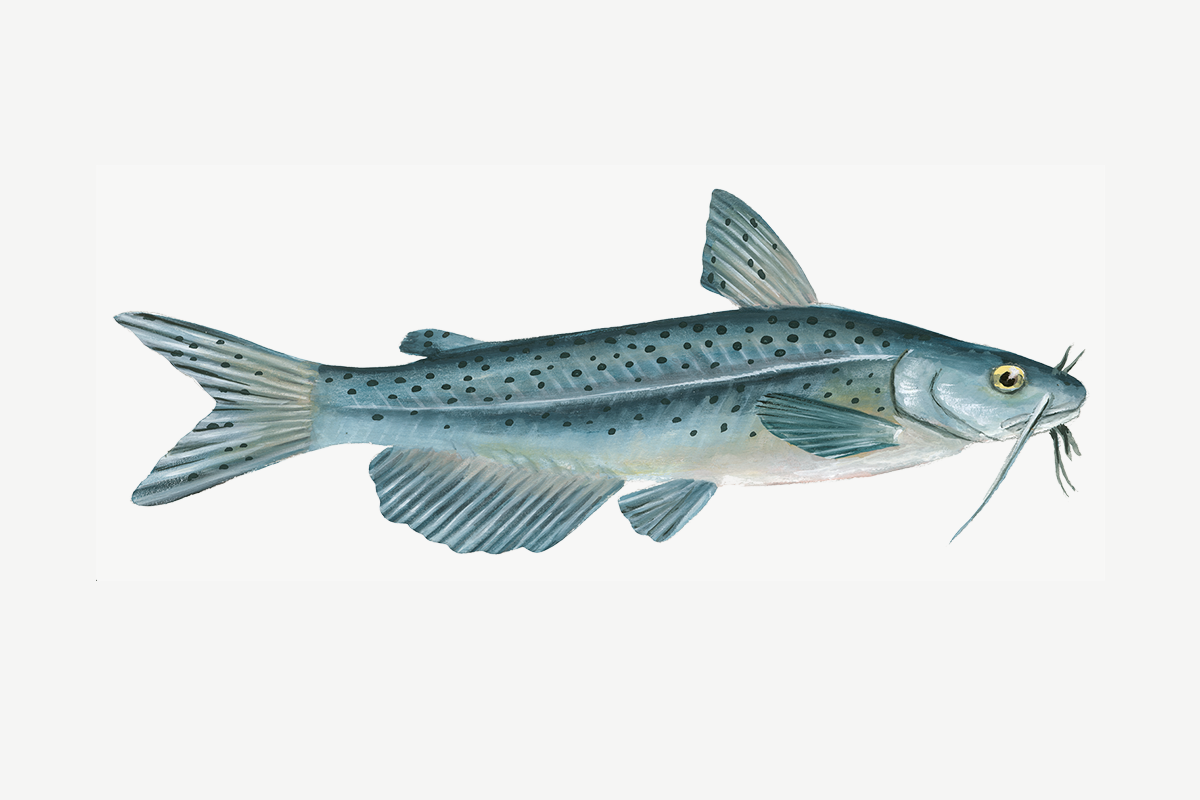
Sustainable catfish & pangasius buying guide
Catfish and pangasius—use this guide to choose wisely.
View this buying guide – Sustainable catfish & pangasius buying guide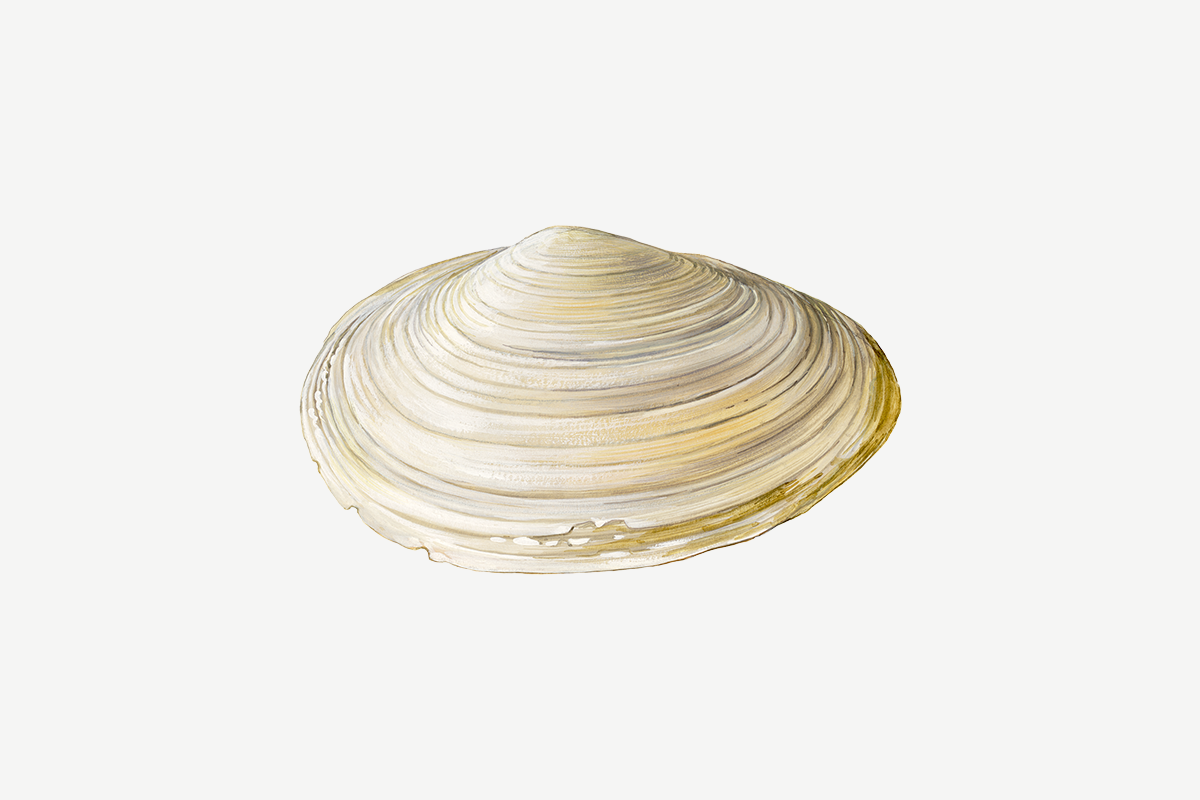
Animals & the ocean
Sustainable clams, mussels, oysters & scallops buying guide
Clams, mussels, oysters, and scallops are among the most sustainable seafood choices.
View this buying guide – Sustainable clams, mussels, oysters & scallops buying guide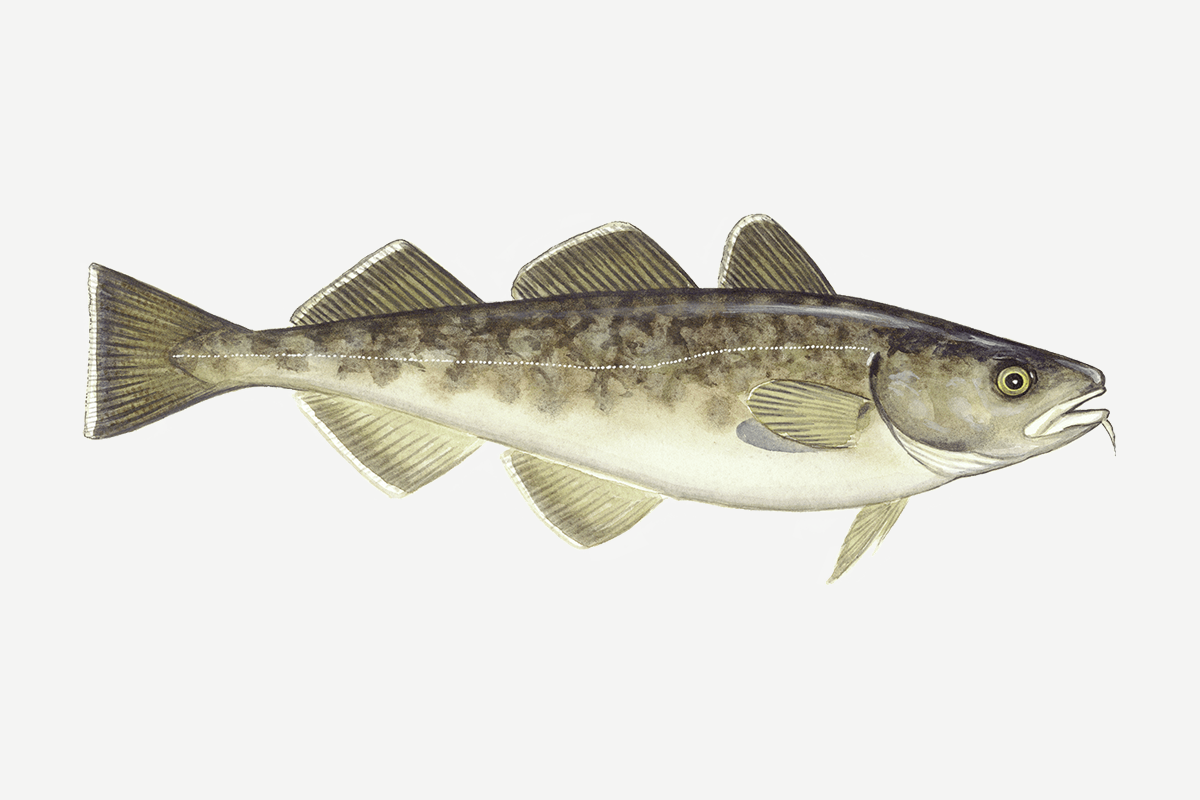
Animals & the ocean
Sustainable cod & haddock buying guide
Know which cod and haddock to buy and avoid the next time you order fish and chips.
View this buying guide – Sustainable cod & haddock buying guide
Animals & the ocean
Sustainable crab buying guide
Crab can be tricky, but this guide makes it easy to know what to buy and avoid.
View this buying guide – Sustainable crab buying guide